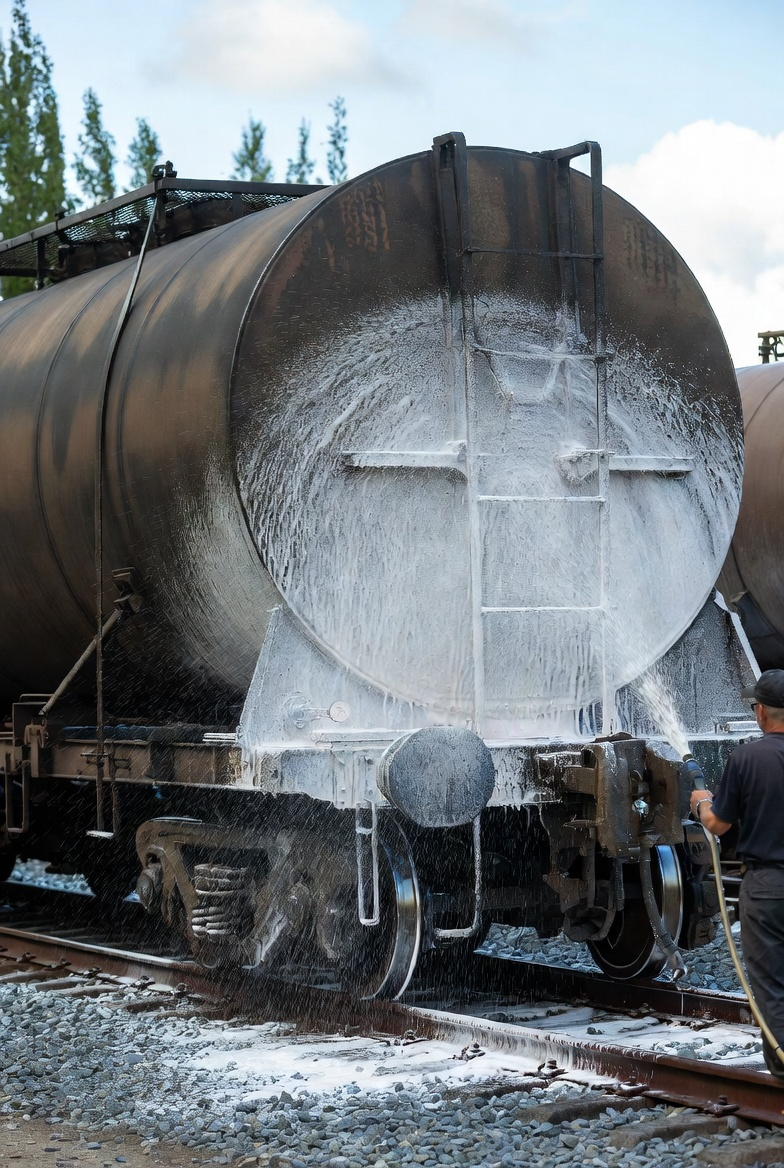
Heavy grease, oil, and hydrocarbon buildup can make machinery hard to maintain, but aggressive solvents aren’t the only way to tackle stubborn contamination. Modern industrial equipment cleaning can use water-based chemistry to loosen, emulsify, and remove oily deposits while reducing dependence on caustics and harsh petroleum solvents.
At Evergreen, we use surfactant-based chemistry designed for hydrocarbon challenges across industrial environments. The goal is simple: break contamination into manageable material that can be removed more efficiently while supporting safer handling and a cleaner work area.
Industrial Equipment Cleaning Does Not Require Harsh Chemistry
Traditional degreasing often relies on strong solvents or highly alkaline products because oil and grease resist ordinary water. Those products may clean effectively, but they can also create stronger fumes, raise handling concerns, and require extra care around equipment surfaces.
A better approach changes how the hydrocarbon behaves. Effective industrial equipment cleaning can use surfactants to reduce surface tension, surround oily material, and keep it dispersed in water instead of allowing it to settle back onto the surface. This gives maintenance crews a practical way to remove contamination without automatically reaching for aggressive chemistry.
Industrial Equipment Cleaning Works Best With a Controlled Process
Successful cleaning depends on more than choosing a product and spraying the surface. Contaminant type, deposit thickness, equipment design, dilution, agitation, and removal method all affect the outcome. A controlled process helps crews match the cleaning method to the actual buildup instead of using unnecessarily strong chemicals.
Identify the Contamination First
Start by determining what is on the equipment. Light oil, lubricating grease, diesel residue, crude oil, tar, and thick hydrocarbon deposits behave differently. Correct identification helps determine product strength, contact time, and the amount of physical agitation needed.
This step also prevents overcleaning. A mild deposit may respond to a diluted solution, while dense residue may require longer contact or chemistry developed for heavier hydrocarbons.
Choose a Biodegradable Degreaser for Equipment
A biodegradable degreaser for equipment can reduce reliance on petroleum solvents and highly caustic cleaners. Evergreen chemistry uses a water-based surfactant system that emulsifies and encapsulates hydrocarbons, allowing oily contamination to disperse into very small droplets.
That mechanism matters because the cleaning chemistry works directly on the contaminant instead of depending only on aggressive solvent action.
Use the Correct Dilution and Contact Time
More product does not automatically mean better cleaning. The right concentration should reflect the type and severity of contamination. Applying the recommended dilution helps control product use while giving the chemistry enough contact with the deposit.
Allowing adequate dwell time can also reduce unnecessary scrubbing. The solution needs time to reach oily layers and begin separating buildup from the equipment surface.
Add Agitation Where Buildup Is Stubborn
Mechanical movement can improve contact between the cleaner and the contaminant. Depending on the equipment, crews may use brushing, circulation, pumping, or controlled washing to move the chemistry across difficult areas.
Our chemistry is designed to work with agitation or circulation for hydrocarbon applications. EverGreen12 is also identified for hard surface cleaning on equipment and industrial surfaces.
Remove Loosened Residue Responsibly
Once grease and oil are lifted from the surface, the remaining wash material still needs proper collection and handling. Use site procedures, local requirements, and the contaminant profile to determine how to manage recovered material.
A cleaning process isn’t complete when a surface looks clean. It ends when you control removed residue and the equipment is ready to return to service.
What Makes Eco-Friendly Equipment Cleaning Effective?
Eco-friendly equipment cleaning works when safer chemistry is paired with the correct application method. Water-based products can be highly effective on hydrocarbon contamination when the formulation is designed to emulsify oil rather than simply push it across the surface.
Useful characteristics to evaluate include:
- Water-based formulation
- Compatibility with the targeted hydrocarbon
- Noncorrosive performance for suitable surfaces
- Low odor or low vapor concerns
- Practical dilution for the cleaning task
- Clear handling and disposal instructions
Industrial Degreasing Solutions Should Match the Deposit
Not every dirty machine needs the same cleaner. Select industrial degreasing solutions based on the material being removed, not just the equipment size. Light oils and routine grease may respond quickly to general hydrocarbon degreasing chemistry. Thick tar, asphalt, paraffin, or heavy sludge may require a stronger approach designed to liquefy dense buildup. Evergreen lists EverGreen12 for general hydrocarbon remediation and degreasing, while EverGreen20 is positioned for heavier asphalt, tar, paraffin, and sludge deposits. Matching the chemistry to the deposit can reduce repeated cleaning cycles and avoid wasting product on contamination that requires a different treatment method.
When Should Equipment Cleaning Methods Change?
A cleaning method should change when deposits keep returning, crews need excessive scrubbing, strong odors become a concern, or the current product requires more aggressive handling than the task justifies.
Also review the process when the current cleaning method causes unnecessary downtime. Chemistry that penetrates and emulsifies hydrocarbon buildup may allow crews to spend less effort on repeated manual removal, especially when combined with suitable circulation or agitation. Maintenance teams should also reassess cleaning methods when equipment begins handling different oils, fuels, or process materials. A procedure developed for light grease may not perform well once heavier hydrocarbon deposits become part of the operation.
Cleaner Maintenance Starts With Better Product Selection
Moving away from harsh chemistry does not mean accepting weaker cleaning. It means choosing a product designed for the contamination, using the correct dilution, allowing enough contact time, and applying suitable agitation. For facilities dealing with oily machinery, pumps, hard surfaces, or hydrocarbon residue, industrial equipment cleaning becomes easier when chemistry and process work together. Better cleaning processes can also reduce equipment downtime, improve maintenance scheduling, and help crews return assets to service more efficiently.
Choose Industrial Equipment Cleaning With Evergreen Chemicals
Contact Evergreen today for industrial equipment cleaning solutions that remove tough hydrocarbon buildup with effective water-based chemistry.